
Over 70% of the world uses Android, but iOS apps generate more revenue. So which platform is actually better for your business?
That’s the most common question when people are thinking of making a mobile app. And there is no one-size-fits-all answer.
Some companies pick Android because it has more users. Others stick with iOS because they believe Apple users tend to spend more money. Both platforms have their strengths, and both can help your business grow if you choose the right one based on your goals.
In this blog, we’ll break down Android and iOS app development in simple terms so you can decide what works best for your business in 2026.
What Is Android App Development?
Android app development means creating applications that will work on phones, tablets, and even smart TVs running the Android OS.
One important thing to understand is that Android works on many different devices and screen sizes. This gives you more reach, but it also means development and testing can take more effort.
In simple terms, if your main purpose is getting as many app users as possible from around the world, then Android app development is definitely the way to go.
What Is iOS App Development?
iOS app development is the process of building mobile applications for Apple devices like iPhones and iPads. These apps run on Apple’s iOS operating system.
iOS users usually spend a lot more money on apps and in-app purchases, which is a great advantage for those companies focusing on attracting high-end users or generating more revenue per user.
In simple terms, if your choice is iOS app development, then you are aiming for superior performance, a much better user experience, and a greater potential for earnings per user.
Android VS iOS: Pros And Cons
Platform | Pros | Cons |
Android | Larger user base across the world | Device fragmentation can make testing complex |
More flexibility in customization | Development can take more time | |
Easier app publishing process | Lower average user spending | |
Works on a wide range of devices | Performance may vary across devices | |
iOS | Better performance and a smooth experience | Limited to Apple devices |
Higher user spending and revenue potential | App publishing is more strict | |
Consistent design and development environment | Less flexibility in customization | |
Strong security and privacy features | Smaller global market share |
Difference Between Android vs iOS App Development
Feature | Android App Development | iOS App Development |
Programming Languages | Java, Kotlin | Swift, Objective-C |
Development Tools | Android Studio | Xcode |
Device Compatibility | Wide range of devices and screen sizes | Limited to Apple devices |
Testing Complexity | High due to device variety | Lower due to limited devices |
App Approval Process | Faster and more flexible | Strict and time-consuming |
Development Cost | Can be higher due to testing and variations | More predictable and controlled |
User Base | Larger global audience | Smaller but high-value audience |
Revenue Potential | Lower average user spending | Higher average user spending |
Android vs iOS: Which Has More Users and Revenue?
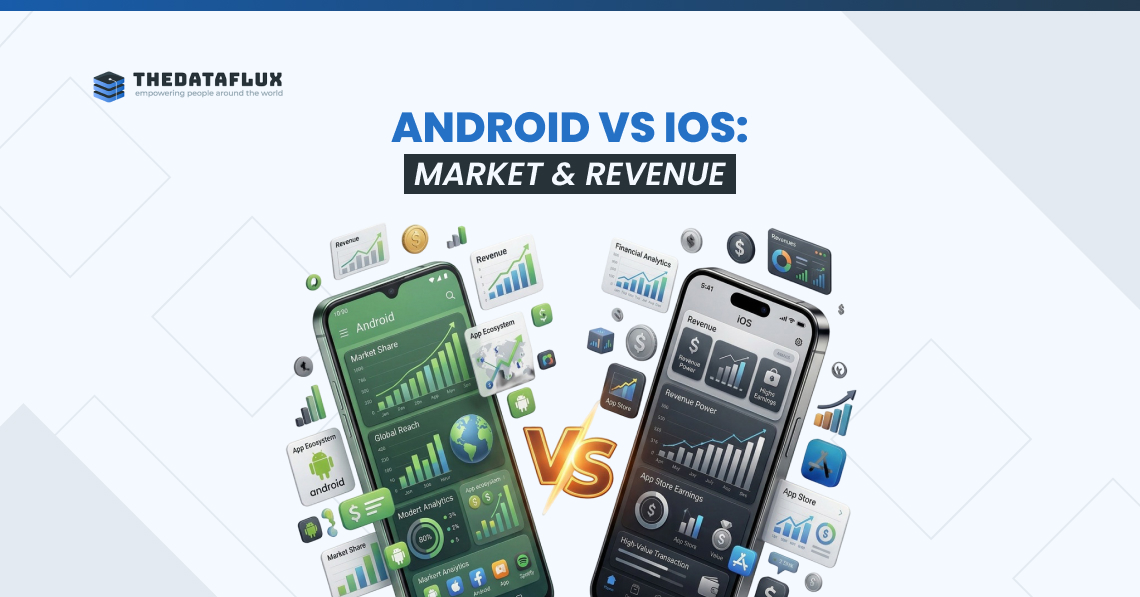
When making the decision about iOS vs Android, it is important to consider the numbers.
Android is the most widely used operating system globally, especially in regions like Asia, Africa, and South America. So, if you aim to reach more people, Android offers a wider potential audience.
On the other hand, iPhone users are mostly willing to pay for apps, subscriptions, and make in-app purchases. This is the main reason why many companies get better monetization results on iOS, particularly in the US and European markets.
So what does this mean for you?
- If your focus is user reach and scale, Android is a strong choice.
- If your focus is on higher revenue per user, iOS often performs better.
Nowadays, many companies are selecting both platforms to combine the benefits of reach and revenue. The final decision depends on your resources, timing, and objectives.
Android vs iOS App Development: Which is Better for Business?
The answer depends on what you want to achieve.
If your goal is to reach a large number of users, Android is a strong choice. It works well for businesses targeting global markets, especially where Android devices are more common.
If you want to earn more money per user, then iOS is the way to go. It is the first choice of many businesses when dealing with premium apps, subscriptions, and generally, users who are ready to spend more.
But in many cases, choosing just one platform is not enough. If your budget allows, starting with one platform and then expanding to the other is a smart approach. That way, you test your idea, learn from users, and make progress gradually.
In simple terms, there isn’t a single “best” platform; the best decision is the one that matches your business plan.
Final Thought
Making a decision on Android vs iOS isn’t only about technical factors. It also involves your business.
Each platform comes with its own advantages. Android enables you to reach more people. iOS, on the other hand, has the potential for higher revenue. Your final call should be based on who your users are, how much you can afford, and what you want to/can achieve working in the long term.
If you are still unsure, the best approach is to plan it properly from the start. Working with the Best Mobile App Development Company In USA can help you choose the right platform and avoid costly mistakes during development.
We at The Dataflux partner with companies to create mobile applications that are feasible, expandable, and well-targeted. It doesn’t matter if you go for Android, iOS, or both; in the end, the center of attention should be on drawing up an app that users genuinely want to work with.
See you in the next blog or maybe while we’re helping you build the right mobile app for your business.
FAQs
Q- Which is better, Android or iOS in 2026?
A- There is no single “better” platform. Android is better for reaching a larger audience, while iOS is better for higher revenue per user. The right choice depends on your business goals and target users.
Q- What is the future of mobile app development in 2026?
A- Mobile app development is moving towards AI integration, faster performance, and better user experiences. Trends like cross-platform development, automation, and personalization will continue to grow.
Q- Is it worth learning iOS development in 2026?
A- Yes, it is still worth learning iOS development. iOS apps generate strong revenue, and there is consistent demand for skilled developers, especially in premium markets.
Q- Is it better to make an app for iOS or Android?
A- It depends on your target audience and budget. If you want a wider reach, go with Android. If you want higher spending users, iOS is a strong option. Many businesses eventually build for both.