
Have you heard that nearly 90% of startups fail within the first five years? And, no, it’s not always because of terrible ideas. A lot of them collapse just because they simply run out of money, or they spend too much time creating their products slowly.
And that’s where full-stack development come to help.
Instead of separately hiring teams for frontend, backend, UI, server management, and database setup… startups can choose one competent developer who handles it all from start to finish.
Less chaos. More speed. Lower costs. Faster results.
In this blog, we are going to go through the reasons why full-stack development is one of the smartest tech strategies for startups in the USA.
What is Full Stack Development?
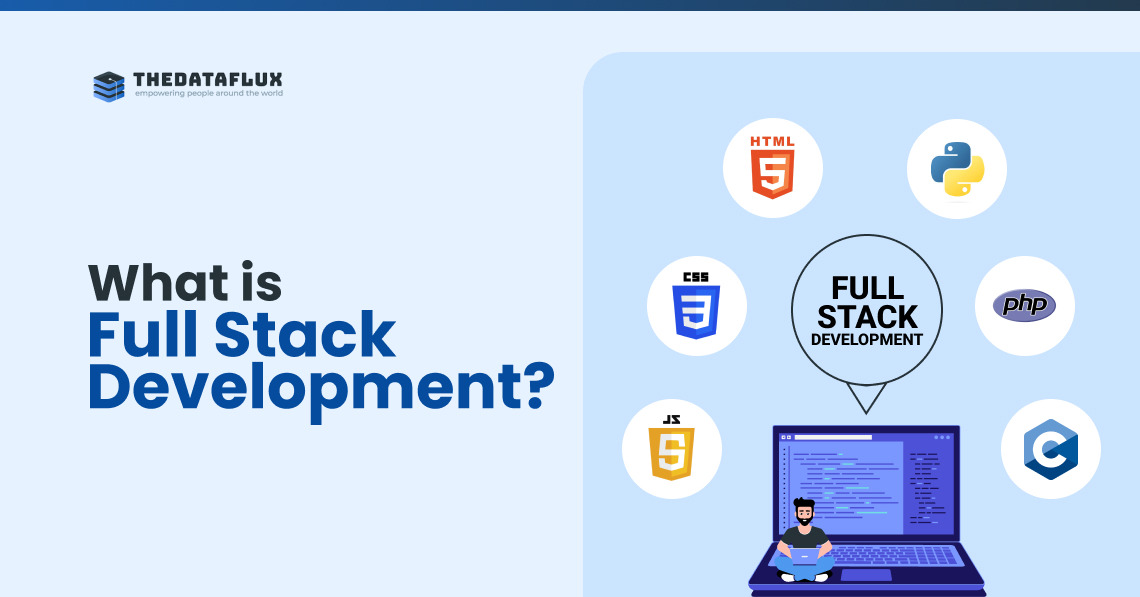
Full-stack development means creating both the front end and back end of an application, the user interface, server logic, and database.
- The frontend is everything users see and interact with, like buttons, layouts, dashboards, and animations.
- The backend is everything that happens behind the scenes, data processing, server requests, authentication, API handling, and more.
A full-stack developer is a person who is capable of both sides of the product, which means they can convert a concept into a functioning software without the need for multiple specialists for every step.
Why Full Stack Development Is Essential for Startups
Launching a startup is a race against time and budget. You can’t afford slow development cycles, fragmented teams, or endless back-and-forth between designers, frontend engineers, and backend specialists. That’s where full stack development becomes a strategic asset.
Here’s why it’s a perfect fit for startups:
End-to-End Ownership
Full stack developers understand both frontend and backend, which means they can take full responsibility for features, from concept to deployment. They do not have to rely on different people to make small changes.
Faster Execution
In the situation of fewer dependencies and handoffs, faster decisions are made, and the development is accelerated without the presence of constant blockers.
More Flexibility in Early Stages
Startups evolve fast. It is possible for full-stack teams to turn, modify properties, or re-make processes rapidly without the need to reorganize entire teams.
Cost-Effective Development
Startups could go for a smaller but more efficient team, which could cover UI, APIs, servers, and databases instead of separately hiring, and this would save money in both hiring and coordination.
In simple terms: full stack development gives startups exactly what they need, speed, clarity, and scalability, without burning through their budget.
Benefits of Full Stack Development for Startups
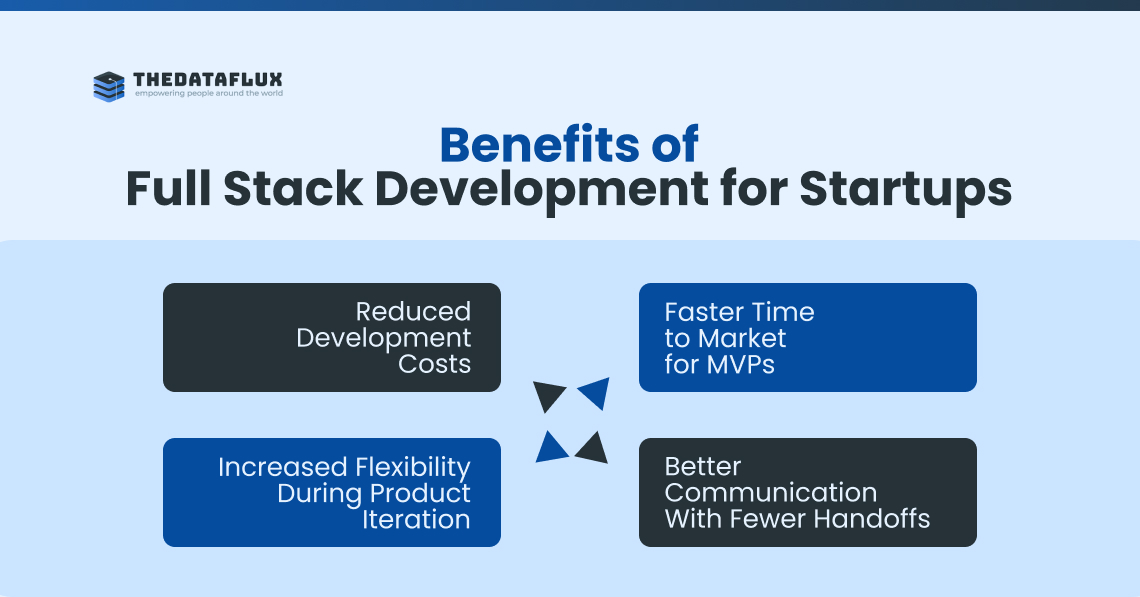
Reduced Development Costs
Instead of hiring separate frontend, backend, and DevOps engineers, startups can rely on one full-stack developer. This, in turn, not only drops the hiring and management costs but also makes the development with the remaining budget possible without sacrificing the quality of work.
Faster Time-to-Market for MVPs
The startup world is all about speed. Full-stack developers, by executing different stages of the development themselves, can fabricate and take the MVPs to the market faster, which means access for testing, pitching to investors, or onboarding early users becomes available sooner.
Increased Flexibility During Product Iteration
Startups rarely stick to their first idea. Full-stack teams are more accommodating towards change, which makes it possible to have feature adjustments, UI tweaks, or backend updates made in a small amount of time without holding up the rest of the process.
Better Communication With Fewer Handoffs
There are fewer miscommunications and fewer delays when there are fewer people in the loop. Full-stack teams that understand the whole system are the ones that have the easiest collaboration and the clearest direction throughout a project.
Why You Should Choose The Dataflux for Full Stack Development
We don’t just write code. We think like founders. Our approach is built around helping startups launch faster, scale smarter, and spend wisely.
Here’s what sets us apart:
MVP-Focused Development Strategy
We understand startup timelines. Instead of drowning you in long development cycles, we prioritize core features, helping you launch a usable version quickly, perfect for pitching investors or testing the market.
Full Stack Experts Across Modern Tech Stacks
Whether it’s React, Node.js, Next.js, Python, or cloud-native architectures; our team is technically prepared to do everything flawlessly from frontend, backend, and deployment, all under one roof.
Transparent Communication & Collaboration
Communication is always there. We keep you informed all the time via straightforward updates, rapid changes, and no technical jargon.
Cost-Effective Without Compromise
We know budgets matter. That’s why we offer flexible engagement models, from full-scale development to dedicated teams, so you can scale only when you’re ready.
Conclusion
In the fast-moving startup world, success isn’t just about having a great idea, it’s about executing it quickly, efficiently, and within budget. That’s exactly why full stack development has become a go-to strategy for modern startups in the USA.
By relying on a single developer or an integrated team that understands both frontend and backend, startups gain speed, flexibility, and cost control, the three things that can make or break an early-stage product.
And if you’re looking for a partner who understands this journey, The Dataflux is here to make it easier. From concept to launch, we facilitate the transformation of your startup’s vision into faster and smarter products.
Hope this blog gave you clarity on why full-stack development is such a powerful choice for startups.
See you in the next blog!