
Most users check at least 2–3 apps before buying a product online. But what if your app becomes the one they always check first?
Price comparison apps are becoming more popular because users seek to get the best deal without compromising their time. They are rather interested in a single platform, where they can compare prices, read reviews, and get information instantly for making a purchase decision.
One of the biggest advantages for a business is the constant inflow of purchase-intent traffic that a well-developed app can attract. As a result, user engagement increases and the possibility of generating revenue is higher.
But before you start, there’s one important question – how much will it actually cost to build a price comparison app in 2026?
The answer is not fixed. It depends on features, design, platform, and many other factors.
In this blog, we’re going to analyze everything so that you know the real cost and also understand the right way to plan your app development.
What Is A Price Comparison Mobile Application?
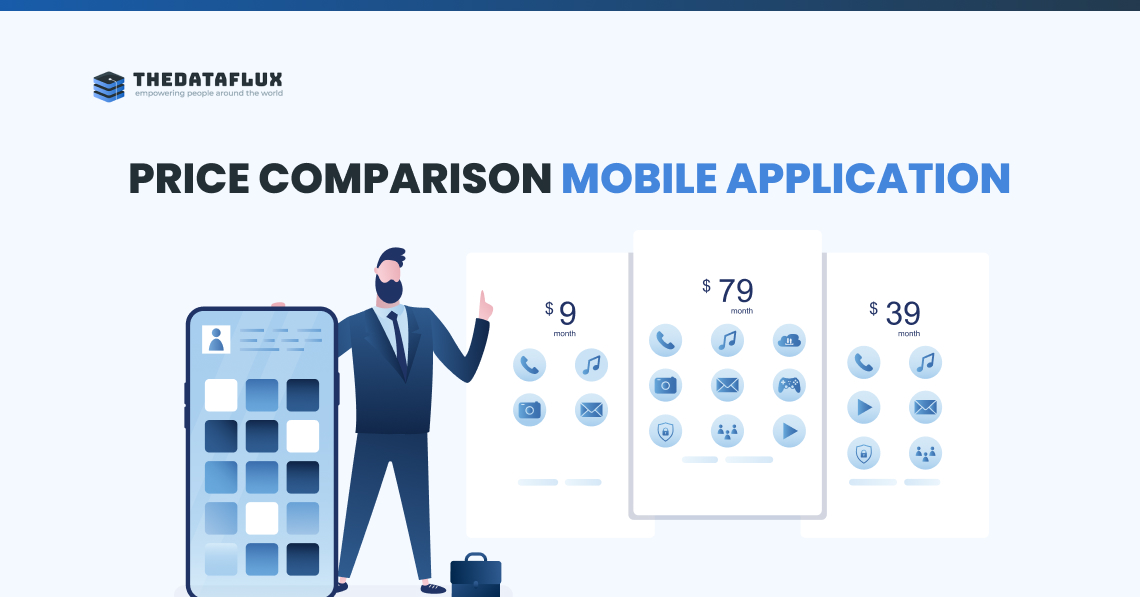
A price comparison mobile application is an app that helps buyers compare the prices of the same product that are being sold by different online shops or physical stores.
Rather than the user having to go through a number of sites to check the offers, they will be able to conduct a search from one single point, and then the app will display the different quantities of the item along with their prices. This saves time and helps them make better buying decisions.
These apps gather data from various shops and retailers, after which they display the information in a clear and simplified form. Some of these apps even have added features such as reviews, ratings, and price history to further guide the buyer in selecting the most suitable option.
In simple terms, a price comparison app helps users find the best deal quickly, while helping businesses connect with customers who are ready to buy.
Cost Drivers For Price Comparison Apps
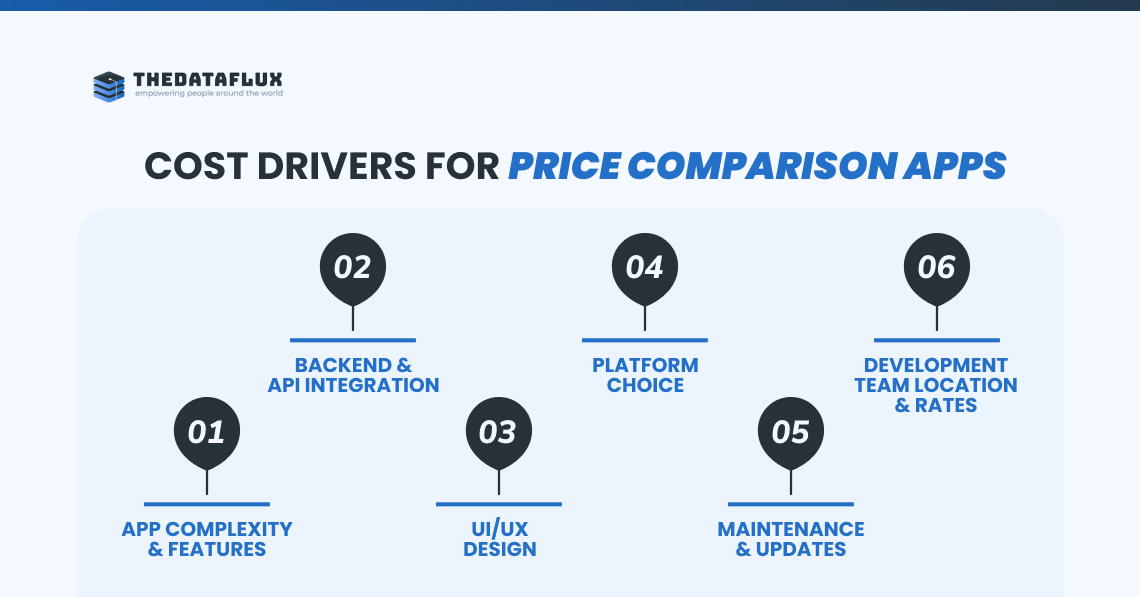
The cost of building a price comparison app depends on several factors:
1. App Complexity & Features
The more complex the app, the higher the price. A basic app with search and price display will cost less, while advanced features like AI recommendations, real-time updates, and user accounts will increase development time and cost.
2. Backend & API Integration
Price comparison apps depend heavily on data from different sources. Integrating APIs of different retailers and updating the data in real time is hard backend development work, which results in a higher cost.
3. UI/UX Design
A simple and clean design is important for user experience. If you want a highly customized and interactive design, it will require more time and effort, which increases the overall cost.
4. Platform Choice
The choice of developing an Android app, iOS app, or both is a big factor in deciding how costly the product will be. If you choose to build the two platforms separately, be prepared to spend more, while the development of the cross-platform apps might help you save some costs.
5. Maintenance & Updates
The cost does not end after launch. You need to give regular updates, fix bugs, and improve performance in order to keep your app running smoothly and competitive.
6. Development Team Location & Rates
The development cost mostly depends on where your team is located. Teams from different regions have different rate structures, which can substantially influence your overall budget.
How To Create A Price Comparison App
Building a price comparison app sounds complex, but if you break it down step by step, it becomes easier to plan.
- First, start with a clear idea. Identify what product categories you want your app to cover and who your potential users are. This helps you build the right features from the beginning.
- Next, plan your features. Initiate the launch with fundamental features like product search, price comparison, and filters. There can be room to introduce things like personalization, reviews, and wish lists, etc., at a later date.
- Then, choose your platform. Will this be an Android-only app, an iOS-only app, or a cross-platform app? The right choice here depends on your potential users and available funds.
- After that, focus on data sources. Your app will need to collect product and pricing data from different retailers. This usually requires API integration or partnerships with platforms.
- Design and develop your app when everything else is ready. A neat and straightforward user interface will let your users locate and compare products on your app easily.
- The last thing is to run your app through the paces before the actual launch. Make sure everything works smoothly, especially search, filters, and price updates.
In simple terms, start small, build the core features, and improve the app over time.
Price Comparison App Features
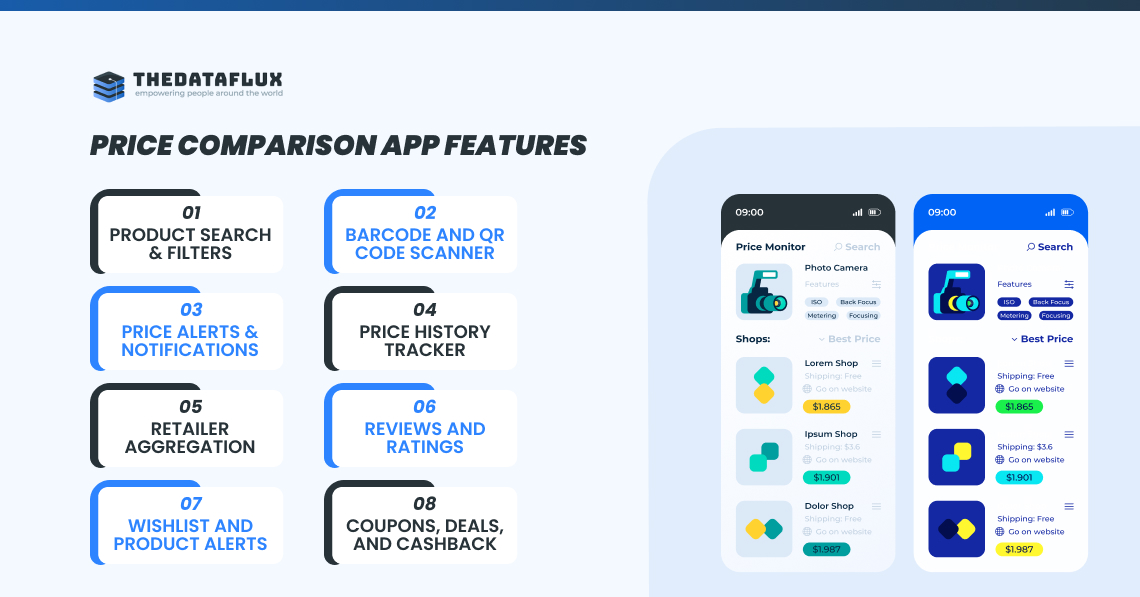
Product Search & Filters
Users should have the ability to locate products quickly by searching for them, as well as using the filter option to narrow down the results based on price, brand, category, or ratings. This way, they can get what they want in no time.
Barcode And QR Code Scanner
Users can use this feature to scan products and directly check and compare their prices on the internet. It is a great tool to make the app beneficial for both online and physical shopping.
Price Alerts & Notifications
It is possible for users to create alert notifications for price reductions of the products that they are interested in. This keeps them engaged and brings them back to the app.
Price History Tracker
Showing past price trends helps users decide whether to buy now or wait. It builds trust and improves decision-making.
Retailer Aggregation
Your application will gather and show the prices of different retailers all under one roof. This is the main feature that makes the comparison possible.
Reviews And Ratings
Reviews and ratings are highly attractive and influential. They are one of the reasons why users buy and use products.
Wishlist And Product Alerts
Users will be able to track product updates and keep themselves informed through alerts. This way, you make your users stay loyal and keep coming.
Coupons, Deals, And Cashback
Adding discounts, coupons, and cashback offers makes the app more attractive. It also increases the chances of users completing a purchase.
Final Thoughts
Developing a price comparison app in 2026 is a great idea. But the success of your app will be determined by the execution of your plan.
The price that you will pay for the app creation depends on the inclusion of features, the design of the app, the platform, and integrations. A simple app may cost less, while a feature-rich app with real-time data and advanced functionality will require a higher investment. The main thing is to design the app, keeping in mind the users’ desires, and launch it, and expand it as the users become more.
More importantly, focus on solving a real problem. If your app makes it easy for users to find the best deals quickly, they will keep coming back.
If you are planning to build a price comparison app and want expert guidance, working with a reliable Mobile App Development Company can help you avoid common mistakes and build the right solution from the start.
At The Dataflux, we help businesses turn ideas into practical and scalable mobile apps that deliver real value.
See you in the next blog, or maybe while we’re helping you build your next app the right way.
FAQs
Q- How much does it cost to develop an app in 2026?
A- The cost can vary a lot depending on features, design, and platform. A basic app may cost less, while a feature-rich app with integrations and real-time data can cost significantly more.
Q- How to build an app in 2026?
A- Start with a clear idea and target audience, then plan your features. Choose the right platform, design a simple interface, develop the app, and test it properly before launch.
Q- What is the price comparison feature?
A- A price comparison feature allows users to check the same product’s price across different platforms in one place. It helps users find the best deal quickly without visiting multiple websites.
Q- What are the most famous Price Comparison Apps?
A- Some well-known price comparison apps include Google Shopping, ShopSavvy, PriceGrabber, and Idealo. These apps help users compare prices, check reviews, and find the best deals.